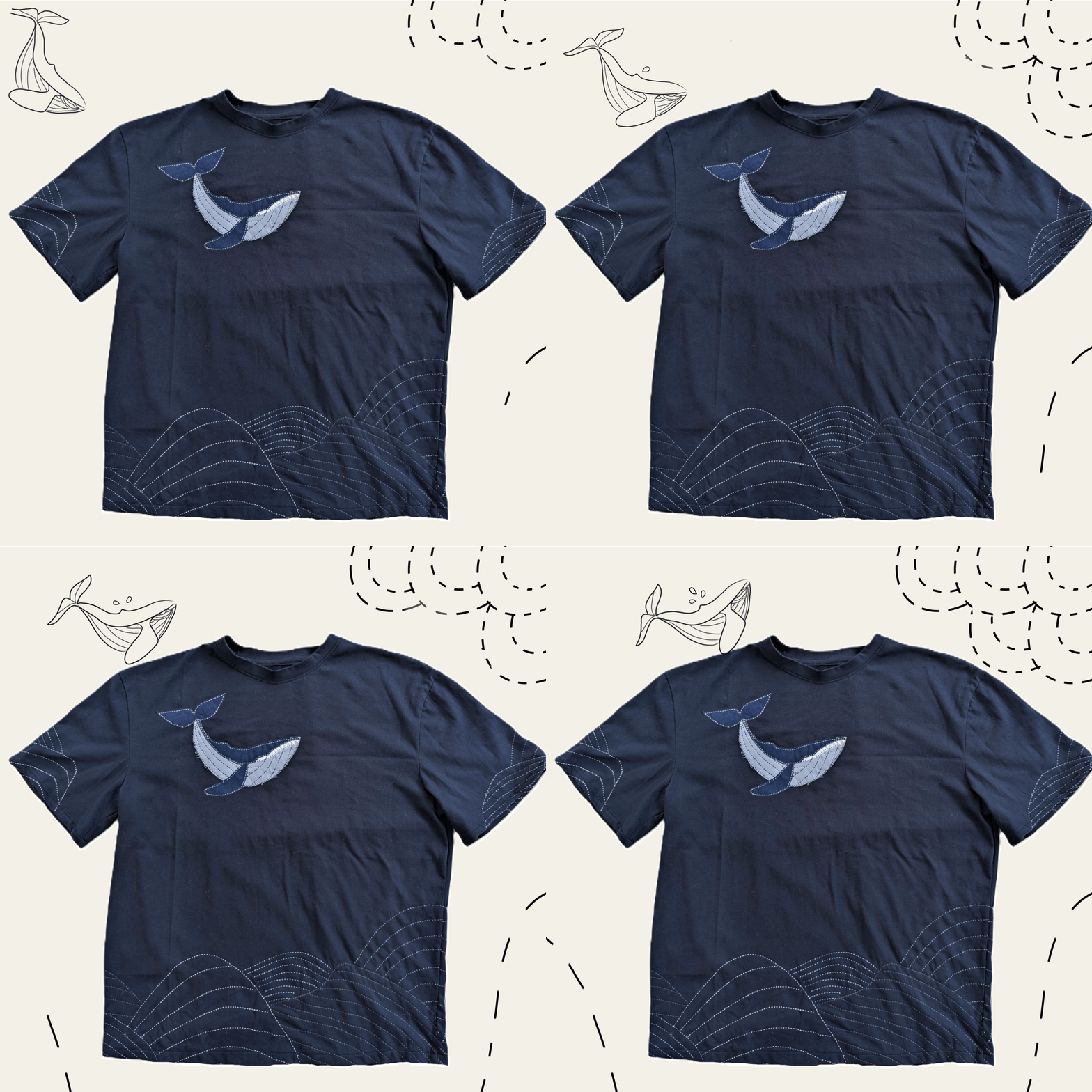
What is Sashiko?
Sashiko is a traditional Japanese hand embroidery technique which originated over 400 years ago and translates to “little stabs”. It improves durability, reinforced worn areas, and adds warmth to clothing. Traditionally, geometric, repeating designs were stitched with white cotton thread on indigo‑dyed hemp or cotton fabric.
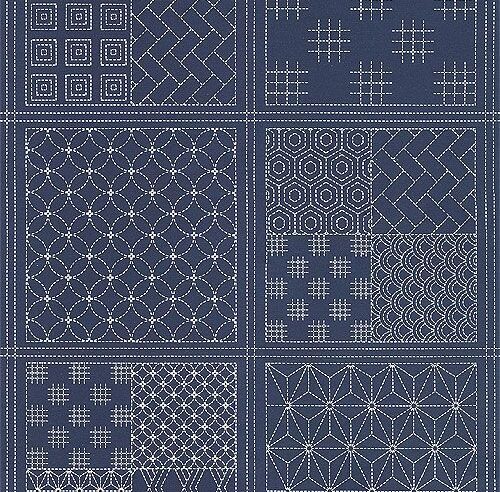
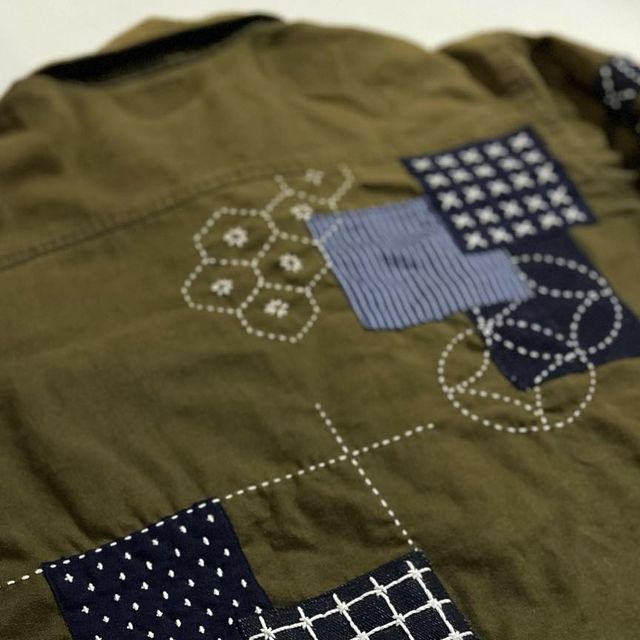
Modern sashiko is an evolution of traditional Japanese embroidery that focuses on the decorative art of visible mending and artistic embellishment. Animals also feature in modern sashiko, with cranes, butterflies, turtles, and fish being popular motifs.
The design:
Inspired by the Uroko (fish-scale) pattern, I set out to create a marine-themed T-shirt, appliquéing a sea creature to unify the design. I also aimed to incorporate the traditional blue fabric and white thread, adding a subtle twist.
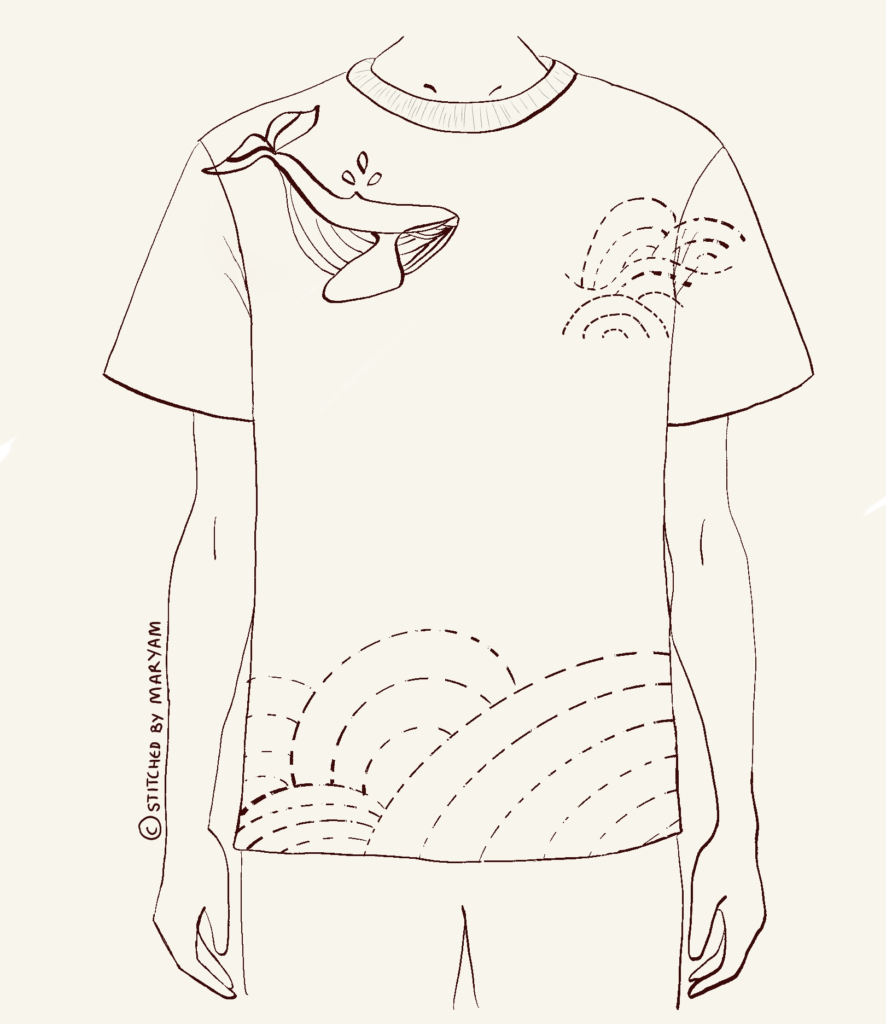
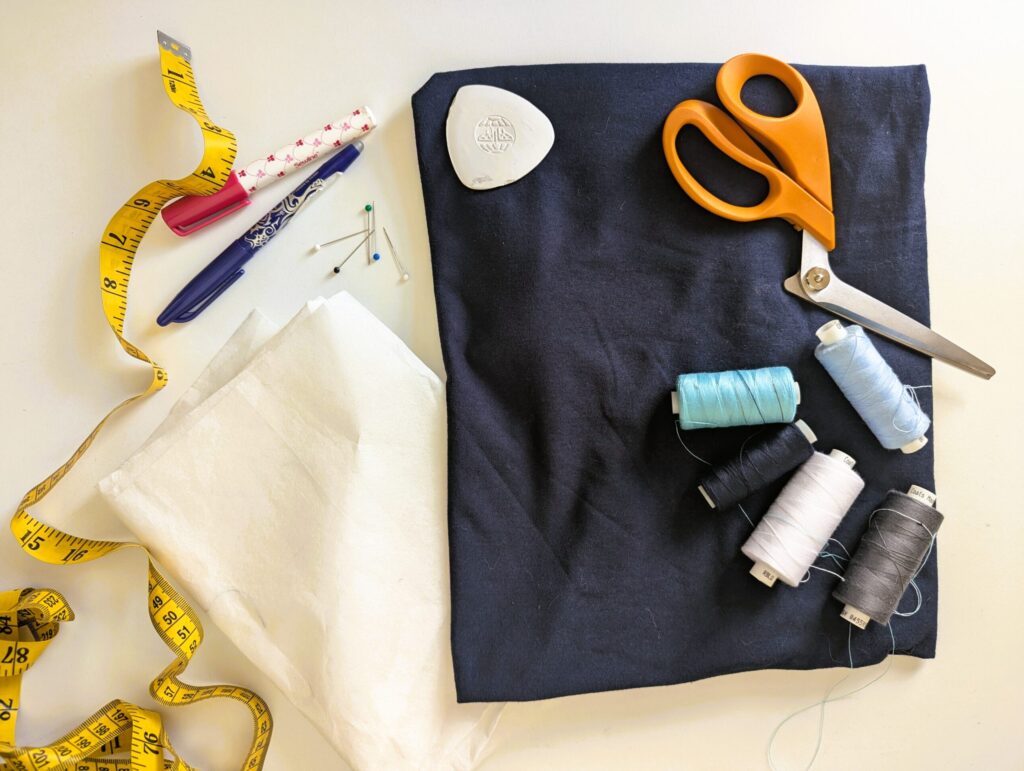
materials used:
- Fabric scissors
- Fabric glue
- Invisible thread
- Threads
t-shirt:
- Dark blue t-shirt material
- White thread
- Blue thread
appliqué:
- Stitch ‘n’ Tear stabilizer
- White thread
- Blue thread
- Blue and white cotton material
Sashiko-Esque Stitching on a Machine:
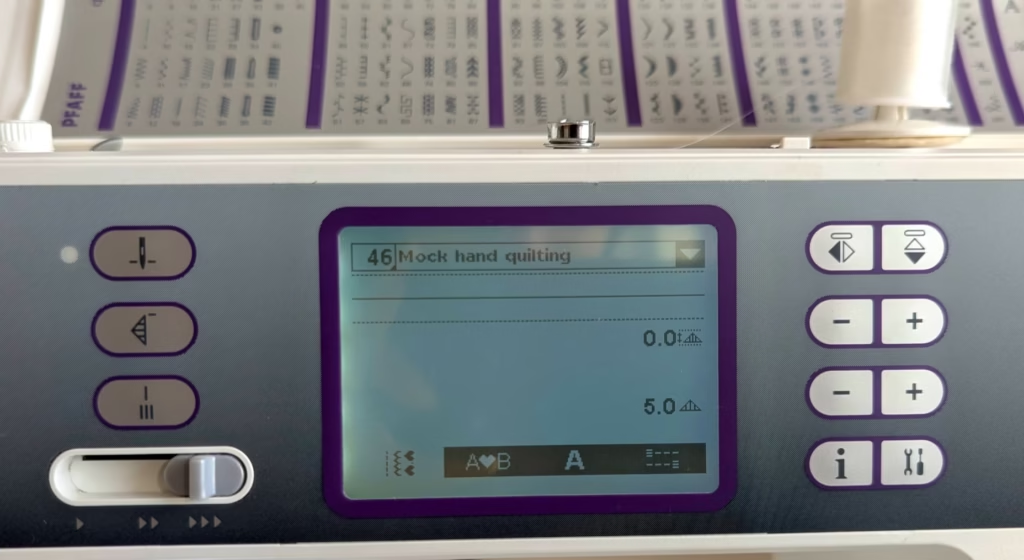
Sashiko is traditionally done by hand; however, to avoid hours of hand stitching, I decided to find a machine stitch that emulates the hand‑stitched look. A mock hand quilt stitch is the closest stitch I could find on my Pfaff sewing machine that imitates sashiko. It is also important to note that using invisible thread for the top thread is integral to achieving the sashiko look.
The Final Piece:
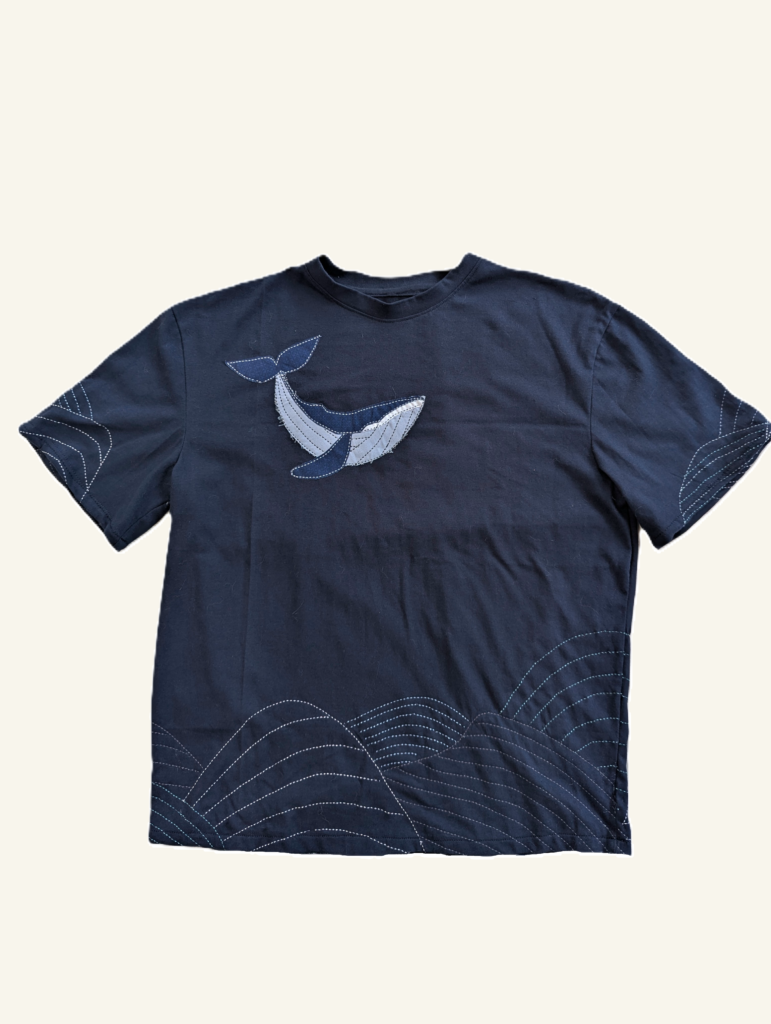
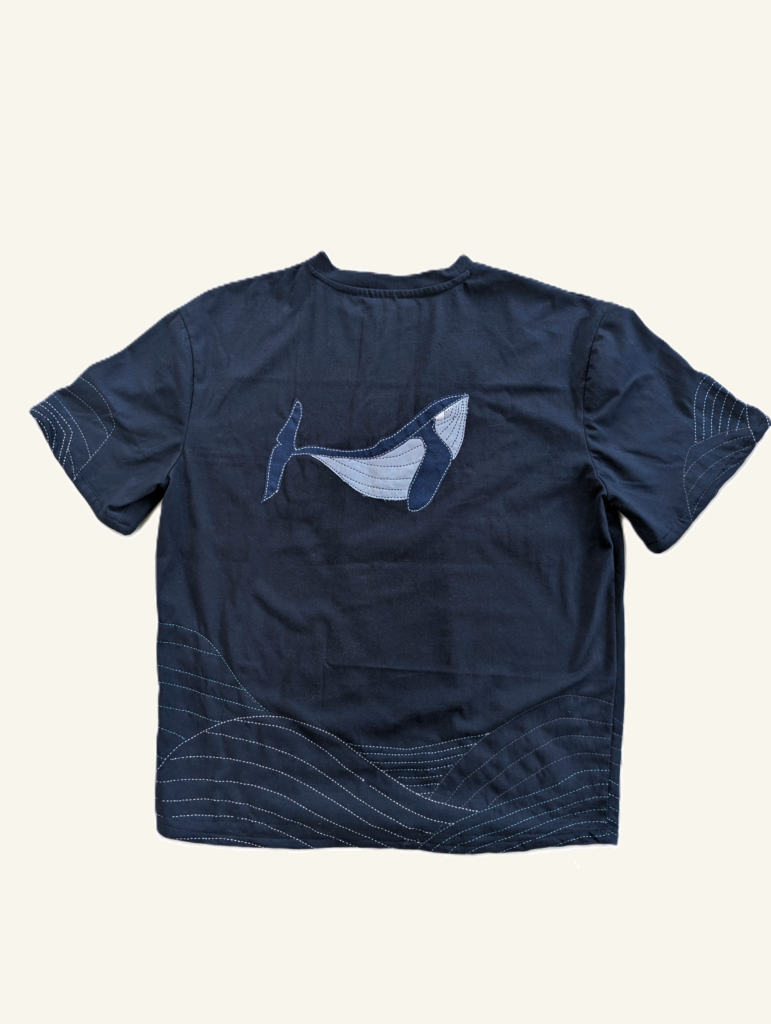
Overall, I am happy with how the piece looks, as well as the fit. I love how there is visual interest on the back of the T‑shirt with the appliqué whale.
If I were to recreate this design, I would complete the sashiko stitching at the bottom of the T‑shirt after the garment had been sewn, to ensure the ‘waves’ flowed seamlessly from the front to the back. I would also experiment further with the wave patterns to create more depth, as well as adjust the placement of the whales.
Leave a Reply